Maps & Infographics
July 13, 2026
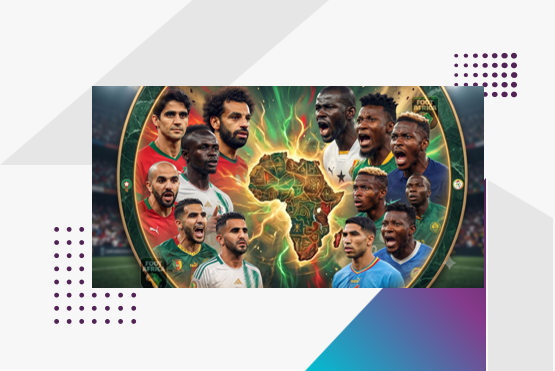
The World Cup for Africa may be over, but her journey is far from finished. For the first time in FIFA World Cup history, nine African teams progressed beyond the group stage, marking the continent's strongest collective performance on football's biggest stage. While Morocco's quarter-final defeat to France brought Africa's historic campaign to an end, the tournament revealed a much bigger story than the final standings.
Historically, African success at the World Cup has been defined by exceptional individual teams. Cameroon inspired the world in 1990. Senegal reached the quarter-finals in 2002. Ghana came within a penalty of the semi-finals in 2010. Morocco became the first African nation to reach the semi-finals in 2022. The 2026 World Cup marked a structural shift. Success was no longer concentrated in one nation.
Morocco reached another quarter-final, Egypt advanced to the Round of 16, while South Africa, Ghana, DR Congo, Algeria, Senegal, Ivory Coast and Cape Verde all demonstrated they could compete with some of the world's strongest football nations. For the first time, Africa's strength was measured by depth rather than isolated excellence. That is a significant milestone.
Looking across Africa's knockout matches, one pattern stands out. Most eliminations came by a single goal, after extra time or on penalties. These are no longer heavy defeats that expose structural weaknesses. They are matches decided by clinical finishing, squad rotation, game management and experience under pressure. That is an encouraging place to be.
Several long-term trends are converging in Africa's favor. European clubs are recruiting African players earlier than ever before. National federations are investing more consistently in coaching, sports science and youth development. Diaspora talent continues to strengthen national teams, while domestic leagues are becoming increasingly professional across several countries.
Morocco's sustained success illustrates what happens when these investments align. The Atlas Lions have now reached the latter stages of consecutive World Cups while continuing to strengthen their domestic football ecosystem. Increasingly, other African nations are following similar pathways.
This question has moved from aspiration to probability. Thirty years ago, asking whether an African nation could win the World Cup felt optimistic. Today, it feels increasingly inevitable. Winning the World Cup requires far more than producing world-class players. It demands sustained excellence across an entire football ecosystem—youth development, coaching, federation governance, domestic leagues, sports science, talent identification, financial investment and tournament experience.
Africa is making progress across each of these dimensions. The remaining challenge is consistency. Previously, every World Cup champion has spent years competing deep into major tournaments before eventually lifting the trophy. France, Spain, Germany and Argentina all followed this pattern. Morocco's back-to-back deep World Cup runs suggest African football is entering that same phase of maturity.
Based on the current trajectory, Africa's first FIFA World Cup champion is no longer simply a question of if, but when. A realistic window is within the next three to five World Cups (2030–2042). This projection is not based on optimism alone. It reflects measurable improvements in player development, federation investment, coaching quality, global club exposure and the growing competitive depth now evident across multiple African nations. While no outcome is guaranteed, the structural trends make an eventual African champion increasingly plausible.
The story of Africa's World Cup is ultimately about more than football. It is about resilience. It is about long-term investment. It is about building stronger systems and competing globally despite fewer financial resources than many traditional football powers. It is about moving from isolated excellence to sustained competitiveness.
Those same themes are increasingly visible across African business, entrepreneurship, technology and innovation. The continent's greatest competitive advantage has never been the absence of challenges. It has been its ability to continue improving despite them. The benchmark is no longer qualifying for the knockout stage. The benchmark is competing for the trophy.
Success rarely happens overnight. It is usually the result of years of incremental improvement that eventually reach a tipping point. Africa's football journey suggests that tipping point may be closer than many think.
Tournament standings tell us who advanced. They do not tell us how Africa performed as a continent. To better understand that progress, our research team developed the Kasi World Cup Performance Index, a new benchmark that evaluates teams beyond where they finished. The Index measures overall tournament performance across progression, results, attacking effectiveness, defensive performance and tournament impact, providing a more complete picture of competitive strength.
This is not simply about analysing the 2026 FIFA World Cup. It is about creating a benchmark that can track Africa's competitive progress over time.


The numbers reinforce a broader structural shift. Africa's success was shared across multiple nations rather than relying on one exceptional team.


The Index reveals perhaps the tournament's most important insight: six African teams scored 68 points or higher, demonstrating that Africa's competitiveness is now distributed across the continent rather than concentrated in a single golden generation.
The World Cup may be over, but Africa's journey is only beginning. The Kasi World Cup Performance Index establishes a benchmark for measuring that journey over time—because becoming world champions will not be defined by one tournament, but by the steady accumulation of stronger systems, deeper talent and sustained competitive progress.
Performance Tiers
Elite Performers (80+)
These teams demonstrated the consistency, tactical discipline and knockout mentality expected of global contenders.
Emerging Challengers (70–79)
These teams exceeded expectations and showed they can compete with the world's traditional powers. Cape Verde and DR Congo, in particular, significantly enhanced their international football reputation.
Competitive Core (60–69)
These teams were competitive throughout the tournament but lacked the clinical finishing or game management needed to convert close contests into deeper tournament runs.
Rebuilding (Below 40)
Tunisia was the only African nation that failed to reach the knockout stage and will likely need to reassess its tactical approach and squad development ahead of the next World Cup cycle.
Africa's journey doesn't end with one tournament, and neither does our analysis. Follow the Kasi World Cup Performance Index as we continue tracking the trends, performance and structural shifts shaping Africa's path to becoming world champions.
Kasi Insight is Africa's leading decision intelligence firm specializing in high-frequency consumer and economic data across Africa. Through its proprietary survey infrastructure and analytics platform, Kasi provides real-time insights that help organizations anticipate economic shifts, understand consumer behavior, and make better strategic decisions.
We welcome collaboration with:
Organizations interested in exploring partnerships or accessing Kasi datasets are invited to contact our research team.
📧 yannick@kasiinsight.com