Isha Raja
August 22, 2022
Share article



The COVID-19 pandemic and the Ukraine-Russia conflict is impacting consumers globally, DRC is not immune, and consumers are struggling with rising prices and shortages in goods. DRC is a massive market for brands, with a population of 99 million, but the current economic and market conditions pose a challenge for brands in the country. Data from Kasi Insight study - Cost of Living in DRC, reveals that 68% of consumers of concerned with rising prices. The poll conducted in June of 2022 amongst 489 respondents seeks to understand how rising prices are impacting consumers, their shopping habits and what brands can do to stay relevant the current environment.
Food and Beverage is the category where price increase has been felt the most, in fact, 65% of respondents state that the prices for items in this category have significantly increased. The other category where consumers have seen a significant price increase is in communication service (airtime, mobile data and internet costs), 42% of the respondents say they’ve seen prices go up a lot.
Interestingly, price increases for food and beverages are felt the most by consumers making more than $900 USD and less so by consumers making less than $900 USD. 91% of households making more than $900 USD per month are seeing food and beverage prices going up at lot. On the other hand, only 9% of households making less than $900 USD per month are seeing food and beverage prices getting out of hand. For other categories such as utilities, alcoholic beverages, clothing, etc. respondents across all income levels had noticed a general increase in prices, but not to the same extent of the prices of food and beverages and communication services.
Inflation is mostly hindering consumers’ ability to spend on discretionary items and housing. Our data shows that 55% of consumers are saying that inflation is negatively impacting their ability to spend on discretionary items while 50% of consumers are finding housing unaffordable because of the inflation.
When it comes to affordable housing, the older they are the hardest the impact, 54% of baby boomers and almost 60% of Gen X are finding harder to find a place due to the inflation, while only 34% Gen Z and 43% of Millennials are negatively impacted.
When it comes to discretionary spending, it’s a different story. Inflation is hindering Gen X and Millennials' ability to spend on discretionary while Baby Boomers and Gen Z are less impacted. 4 in 10 Baby Boomers and Gen Z find it harder to spend on discretionary while 6 in 10 Gen X and Millennials.
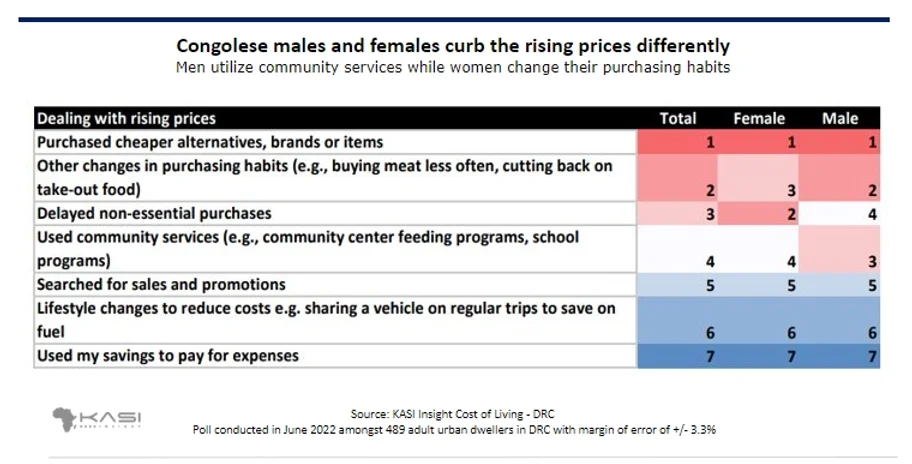
52% of the respondents are purchasing alternatives (brands/items), while 44% are changing purchasing habits more generally (purchasing/using fewer products and services) in response to the rising prices. Interestingly, male respondents have demonstrated a use of community services (e.g., community centre feeding programs, school programmes, etc.) more than females. Overall, 43% of respondents, were using these services.
Brands and businesses have an opportunity to curb the impacts of the rising prices for consumers through innovative and creative means. Through understanding the pain points felt by the various demographics (income, age-group, gender), brands can see where these individuals are hit the hardest and what they are doing to try and curb the impact of the rising prices. Such data can help brands make informed decisions.
Our data intelligence platform has comprehensive data on Congo and can provide valuable insights to help your business make fast data-driven decisions.
Contact our team today to explore how our economic intelligence can empower your decision-making process. Win with confidence with Kasi insights https://www.kasiinsight.com/thehub
#Inflation #Consumers #Congo #Congolese #DRC #Africa #Insight #Kasiinsight
1573 views
Share article
The Signal Investors Are Missing in African Equity Markets
How Consumer Sentiment Reveals Uganda’s Financial Stress Cycle
Ghana’s financial system is shifting from access expansion to behavioral discipline