Reports
October 15, 2015
Overview
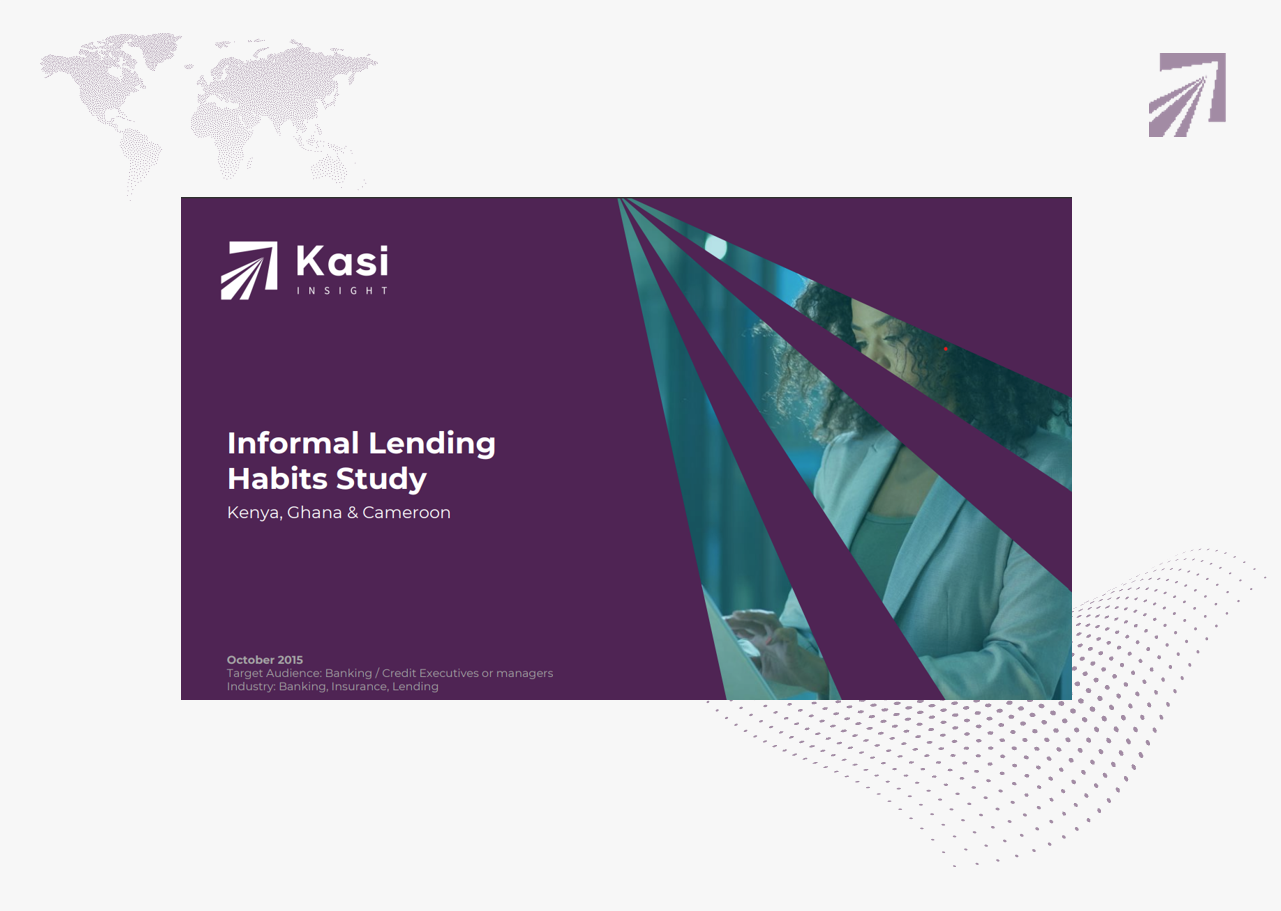
The "Informal Lending Habits Study" conducted by Kasi Insight explores consumer behavior and attitudes toward money lending in Kenya, Ghana, and Cameroon. The study focuses on informal lending practices, payment options, and the dynamics of borrowing and lending among urban dwellers aged 18-55. This report provides valuable insights into the intricacies of informal lending and the preferences of the target audience.
Key Takeaways
Liquidity in Informal Lending: The study reveals that informal lending is highly liquid in Africa, with nearly 90% of respondents acknowledging lending money over the past three months. Ghana appears less liquid compared to Kenya and Cameroon, with variations in loan frequency and amounts.
Loan Characteristics: Respondents in Kenya exhibit the highest lending frequency, while a significant percentage in Cameroon and Ghana did not lend during the surveyed period. The majority of loans are small credits, with a prevalence of 1-3 months term loans, particularly in Ghana. Friends and family receive the bulk of loans.
Social Aspects of Lending: The study emphasizes that informal lending is more of a social engagement than a business decision. Most lenders do not include interest or require guarantees when lending, highlighting the interpersonal nature of these transactions.
Best Ways to Get Loans: The preferred methods for obtaining loans vary by country, with Kenyans favoring banks and Ghanaians leaning towards family. The study suggests that Kenya has the most mature lending ecosystem among the surveyed nations.
Kasi Credit Score: The report introduces the Kasi Credit Score (KCS), a crowdsourced, community-based credit score capturing consumers' creditworthiness in the local unstructured and informal environment. The credit score is experimental and available in Kenya, Ghana, and Cameroon.
Methodology
Kasi Insight conducted a 10-minute online survey from May 14th to September 25th, 2015, targeting urban dwellers aged 18-55 in Douala & Yaoundé (Cameroon), Nairobi (Kenya), and Accra (Ghana). The survey had 2185 respondents. Data was collected through an internet-based network. The study is based on claimed behavior from online survey responses, offering insights into the habits of existing internet users. The Kasi Credit Score methodology involves surveying 1000 consumers/lenders per country, focusing on risk, liquidity, usage, and collection.
The study concludes that informal lending plays a significant role in these African countries, contributing to the local financial ecosystem. It highlights the need to understand the social and cultural aspects of lending, emphasizing the importance of community-driven credit scores like Kasi Credit. The report provides a foundation for businesses, especially in the banking, insurance, and lending sectors, to tailor their strategies to the prevalent informal lending practices in the target countries. Kasi Insight aims to empower business leaders with actionable insights to navigate and succeed in the dynamic African consumer market.