Reports
May 8, 2022
Overview
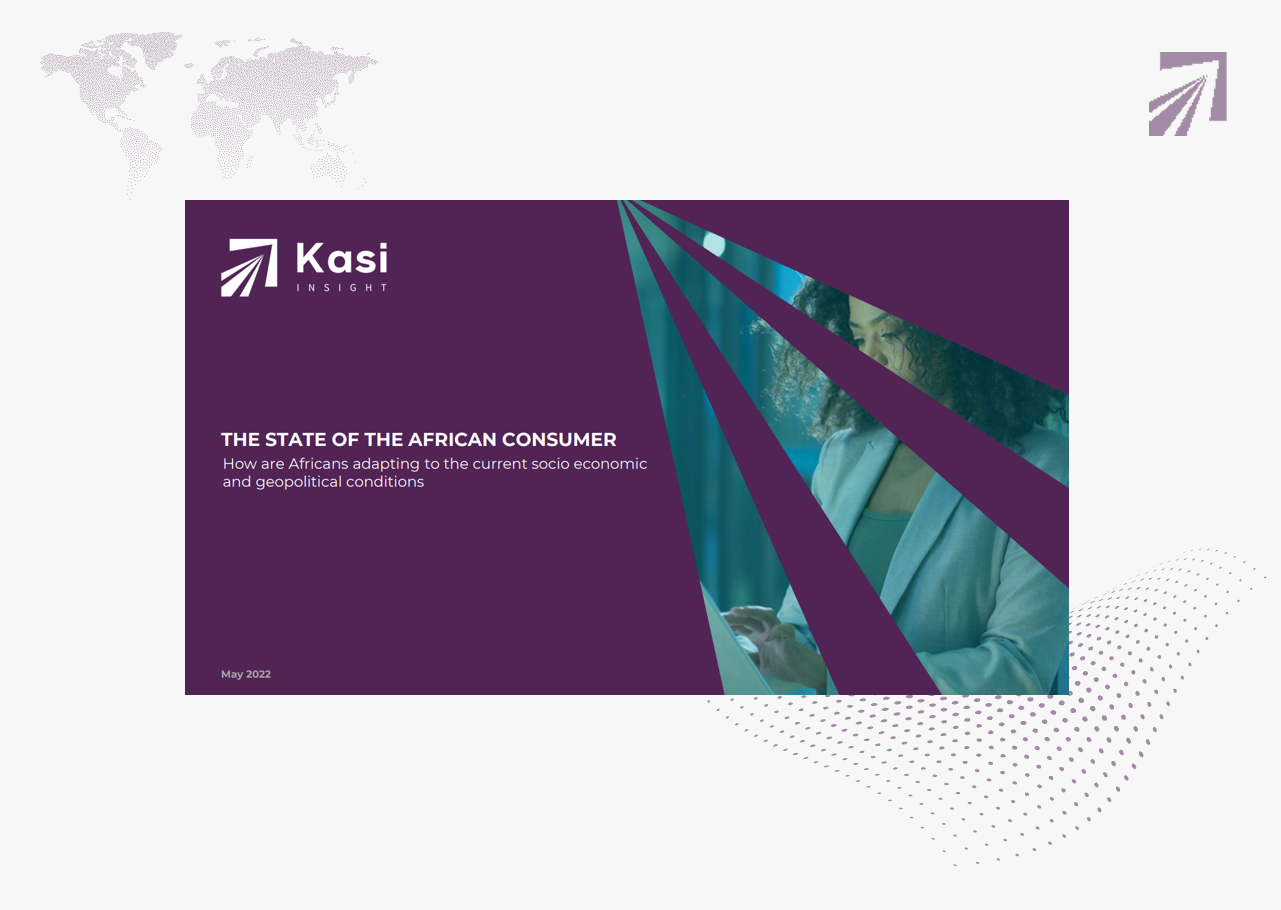
The report titled "The State of the African Consumer: How Africans are Adapting to Current Socioeconomic and Geopolitical Conditions (May 2022)" provides a comprehensive analysis of consumer sentiments across 20 African countries. The study focuses on key economic indicators, including the direction of the economy, household income expectations, purchasing power for necessities and discretionary items, job market perceptions, and the impact of COVID-19 recovery on consumer outlook.
Key Takeaways
Economic Outlook: Consumers express uncertainty, with 48% believing that their country's economic conditions will remain the same over the next 6 months, while 27% expect improvement and 25% anticipate worsening conditions.
Household Income Expectations: About 45% of consumers foresee no change in their household income, while 30% expect an increase and 23% anticipate a decrease in the next 6 months.
Purchasing Power: Approximately half of consumers are uncertain about meeting regular expenses, and 53% are undecided about the timing for large discretionary purchases. Baby Boomers are generally more optimistic about both necessities and discretionary spending.
Job Market: A significant portion (52%) finds it difficult to find jobs, while 41% are uncertain. Only 7% perceive an easier job market. Gen Z faces the toughest job market, followed by Millennials and Gen X.
COVID-19 Recovery: Only 23% believe their country has returned to normal two years after the pandemic, with various timelines suggested for recovery.
Methodology
Kasi Insight employs a robust methodology, conducting surveys from March 20 to April 9, 2022, among 9,522 urban dwellers in 20 countries. The target population includes economically active adults in major urban cities, with a sample size of 500 respondents per country. The confidence level is 95%, and the margin of error is approximately 4%. Data collection utilizes Computer-Assisted Self-Interviewing (CASI) at interview sites, with trained interviewers, back-checking, and authentication measures in place.
The report highlights the nuanced economic landscape in Africa, marked by uncertainty and varied consumer sentiments. As inflation, supply chain disruptions, and geopolitical risks increase, consumers face challenges in meeting basic needs and making discretionary purchases. The recovery from COVID-19 adds an additional layer of complexity to the economic outlook. While generational differences exist, the overall consensus reflects concerns about economic stability and job market challenges. Businesses and policymakers can leverage these insights to navigate the evolving African consumer landscape.