Sandra Beldine Otieno, MSc
March 3, 2025
Share article



Kasi Insight’s Human Connection Survey provides a deep understanding of how relationships evolve, from where people meet to their beliefs about love, communication, financial responsibilities, gender roles, conflict resolution, and perceptions of gender-based violence. In Kenya, the survey highlights that while love and companionship are central to relationships, financial expectations play a defining role often creating tension when responsibilities feel unbalanced.
Only 16% of respondents feel that financial responsibilities are equally shared with their partner. Cohabiting partners are the most likely to perceive fairness, with 26% saying financial contributions are balanced. Among married individuals, 17% agree, while 18% of those dating feel the same. For singles, financial independence comes with its own burden, as just 8% believe financial responsibilities are shared.
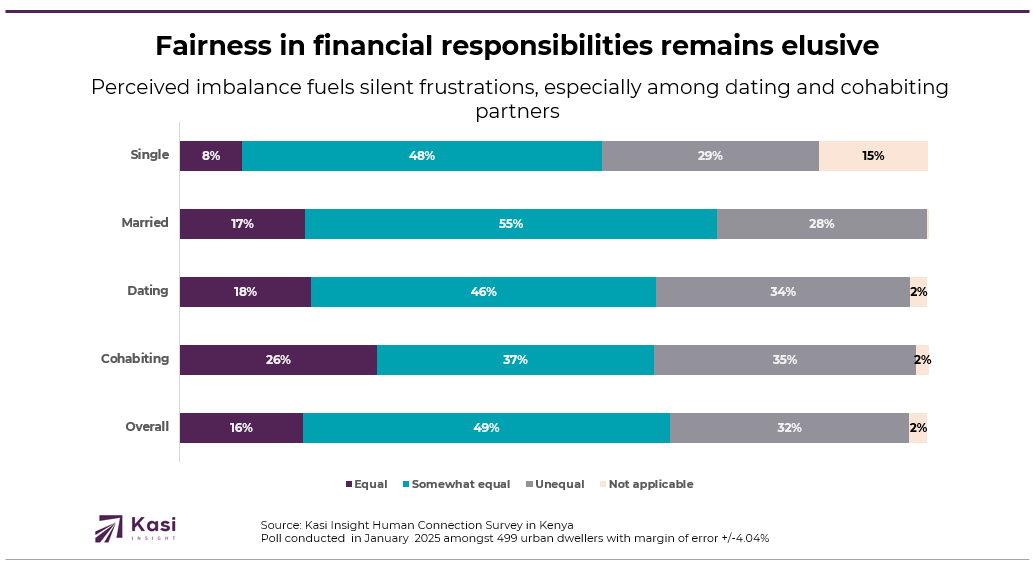
While some couples manage to split financial responsibilities in ways they find fair, many do not. Nearly 49% of respondents describe financial contributions as “somewhat equal,” meaning both partners contribute, but one still feels more burdened. Meanwhile, 32% of respondents say financial responsibilities are outright unequal, with dissatisfaction highest among dating (34%) and cohabiting (35%) individuals. When one partner feels they are carrying a heavier load—whether through direct financial contributions or unpaid household responsibilities—unspoken resentment builds, leading to long-term frustration and conflict.
Despite evolving social norms, traditional gender roles remain deeply embedded in financial and household responsibilities. The survey shows that 60% of respondents believe that men are still expected to be the primary earners while women manage domestic tasks. This belief is most pronounced among cohabiting couples, where 68% say gender roles shape their dynamic, followed closely by 62% of married individuals. The findings suggest that as relationships progress, gendered expectations become more entrenched, reinforcing financial and domestic pressures.
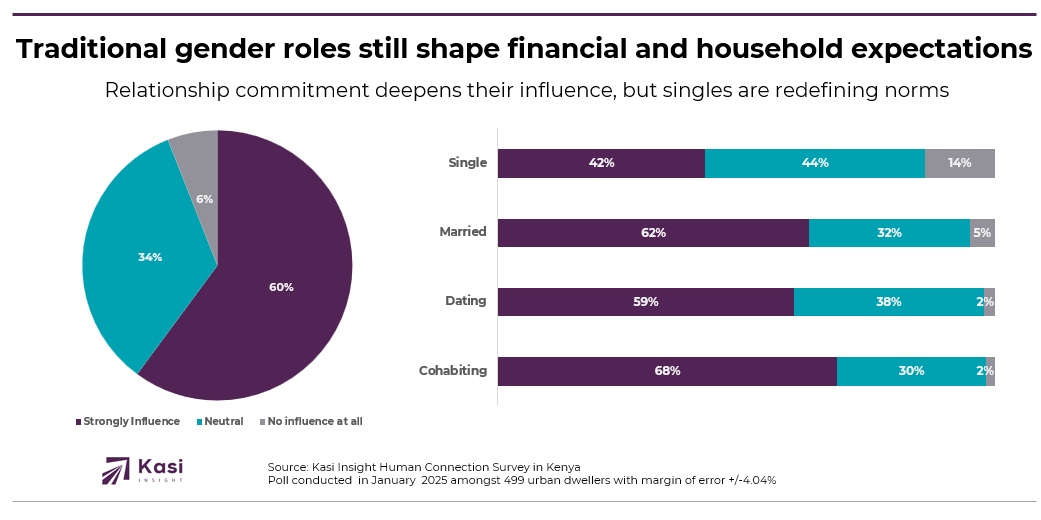
Dating partners report a slightly lower impact, with 59% acknowledging the influence of traditional gender roles in their relationships. However, among singles, the perception shifts—only 42% feel these expectations affect them, and 14% believe gender roles play no role in their financial or household decisions. This suggests that financial independence allows singles to redefine expectations, while those in relationships must still navigate deeply rooted societal norms. When these expectations clash with modern realities such as dual-income households or shifting financial dynamics, relationship stress becomes harder to ignore.
The survey highlights that financial strain in relationships is often driven by perception rather than actual income levels. The real source of tension is not just how much a partner contributes, but whether their efforts, financial or otherwise, are recognized and appreciated. When financial or household responsibilities feel unbalanced, many couples do not address these frustrations directly, leading to long-term dissatisfaction. While this is particularly evident in dating and cohabiting relationships, financial disagreements can also strain marriages when expectations are misaligned.
Financial coaching can help couples have structured conversations about money before financial stress undermines their relationship. For married and cohabiting partners, personalized financial planning can ensure that both individuals feel secure in their financial roles, reducing feelings of unfairness. Dating partners can benefit from early discussions about financial responsibilities, ensuring that expectations are clear before making long-term commitments. Singles, who bear full financial independence, may need financial literacy programs to help them navigate financial pressures and plan.
Beyond financial concerns, relationship coaching can provide couples with the tools to improve communication and conflict resolution, ensuring that financial disagreements do not escalate into deeper resentment. By addressing these tensions early, individuals and couples can build stronger, more resilient relationships. As financial pressures continue to influence relationship dynamics in Kenya, open discussions about money, expectations, and responsibilities will be key to fostering long-term stability and emotional well-being.
Share on socials using this caption: 💰❤️ Money and love don’t always mix! Only 16% of partners in Kenya feel financial responsibilities are equally shared, while outdated gender roles add to the strain. Is financial fairness the key to relationship success? Let’s talk! #LoveAndMoney #Kenya #FinancialFairness #Relationships
1611 views
Share article
A Strategic Material for Development Sustainable Roads in Africa
Foresight Is No Longer Optional: Why Africa’s Decision Makers Must Move From Insight to Intelligence
Africa’s Data Dilemma: Waiting for the Porsche While Refusing the Bicycle