Dinah Nekesa
January 27, 2026
Share article


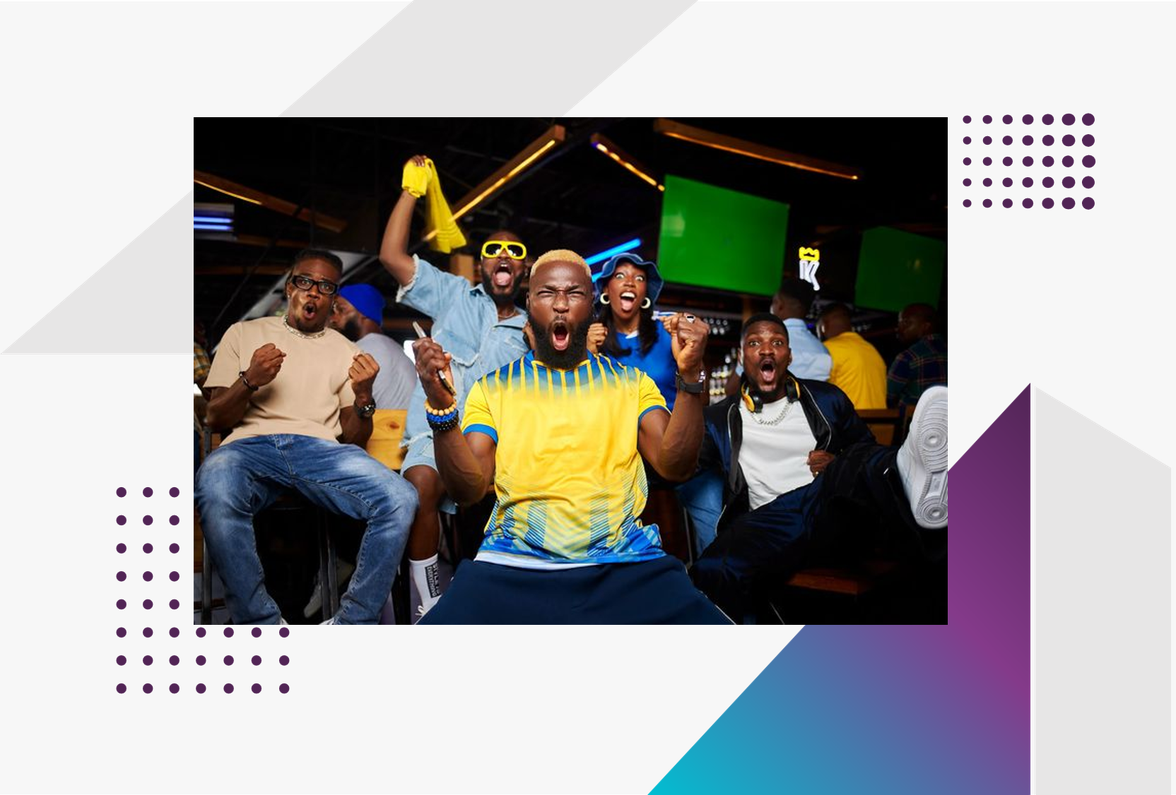
Football in Africa is more than a sport, it is a cultural heartbeat, a daily habit, and a powerful gateway to understanding and engaging the continent’s next billion consumers.
Following AFCON 2025, Kasi conducted a large-scale survey across six African markets, Kenya, Nigeria, Ghana, Egypt, Morocco, and South Africa, to map the behaviors, preferences, and experiences of football fans.
The study explored who fans are, how they discover and follow football, the teams and players they support, and the platforms and devices they use. Fans navigate YouTube, WhatsApp, TikTok, Instagram, Facebook, and X/Twitter to follow matches, engage in communities, and create content, with live matches remaining the emotional peak of their consumption.
They are consistent spenders, typically investing $20–$50 annually on merchandise, streaming, tickets, and betting, yet friction from cost, limited access, and unstable internet constrains deeper engagement.
The survey also examined fan expectations for players, clubs, leagues, and brands, as well as perceptions of local football infrastructure and digital access, providing a holistic view of the African football fan experience, with findings analyzed across key demographic segments of age, gender, and country.
Fans are engaged, digital, and willing to spend. What’s missing is not interest, but models built for how African fans actually consume, pay, and participate in football.
Fan Engagement is High and Emotionally Driven
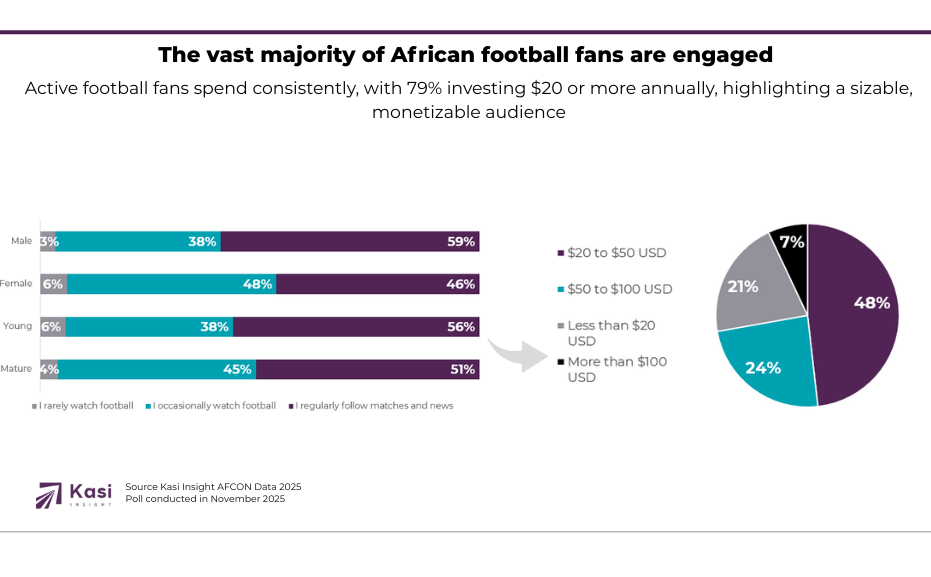
African football fans are highly engaged, with 53% regularly following matches and news, and only 5% rarely watching. Young males show the strongest live engagement, while interest remains consistent across mature fans and women. This demonstrates football’s role as a central part of daily life, not just entertainment, creating peak moments around live matches that brands and leagues can leverage for engagement. Brands and broadcasters should prioritize match-day activations, live integrations, and real-time offers rather than post-match content or passive sponsorships.
Fans are Mobile-First and Socially Connected
Fans navigate YouTube, WhatsApp, TikTok, Instagram, Facebook, and X/Twitter to follow matches, engage in debates, and create content, forming a continuous, interconnected ecosystem. Smartphones are nearly universal (96% ownership), making mobile the primary gateway for discovery and consumption. This underscores the importance of multi-platform digital strategies to reach fans where they already spend their time. Reach and frequency come from ecosystem thinking, not single platforms. Winning strategies require mobile-first content, creator partnerships, and distribution designed for sharing and conversation, not just publishing.
Spending is Consistent but Value-Conscious
Most fans spend between $20–$50 annually on football-related activities such as streaming subscriptions, merchandise, tickets, and betting, with a meaningful segment extending to $50–$100. While willing to pay, they face friction from costs, limited access, and unstable internet. Brands can unlock further spending by reducing barriers and offering affordable, accessible, and football-linked products or experiences. The opportunity is not premium pricing but volume at scale. Micro-pricing, bundles, prepaid options, and mobile-money payments will unlock growth faster than high-ticket offers.
Access Barriers Are Infrastructure Problems, Not Demand Problems
Fans report that high data costs (60%), time constraints (61%), limited channel access (51%), and lack of local coverage (33%) prevent deeper engagement. These are infrastructure and accessibility issues rather than a lack of interest, indicating that addressing these frictions can meaningfully increase consumption and brand impact. Investors and brands that help reduce friction, through data-light products, offline-to-online models, viewing centers, or telco partnerships, can directly expand the market rather than compete for the same spend.
Authenticity Is the Currency of Trust
Fans value brands that invest in grassroots programs (57%), community initiatives (39%), and localized content (34%) over superficial sponsorships. Younger fans, in particular, amplify these trends by engaging digitally, following international clubs, adopting gaming and digital assets, and prioritizing favorite players. Brand value comes from participation, not presence. Long-term returns favor brands that invest in the football ecosystem, youth, women’s football, local leagues, rather than one-off visibility plays.
Optimism About the Future Signals Growth Opportunities
Fans are optimistic about African football’s trajectory, highlighting youth development, professionalization, infrastructure, global competitiveness, and digital transformation as key priorities. This forward-looking mindset presents opportunities for clubs, leagues, and brands to innovate and expand engagement with a fan base that is already invested and ready to participate.
African football fans are not an emerging audience, they are an active, paying, emotionally invested market constrained by access, not interest.
Brands that succeed will be those that reduce friction, offer accessible value, and align authentically with fan culture. From affordable merchandise and streaming bundles to community-led initiatives, purposeful engagement drives both loyalty and monetization.
Contact our team today to explore how our football and consumer intelligence can inform your strategy and help you capture Africa’s next billion fans. Win with insight, win with Kasi. https://www.kasiinsight.com
#AfricaInsights #FootballFans #ConsumerTrends #AFCON #AFCON2O25 #African Football
458 views
Share article
While Patriotism Trumps Football, Africans Expected Cameroon To Win It All
AFCON 2021 Sports Betting wins the marketing and branding trophy
AFCON brought economic prosperity but not much unity in Cameroon