
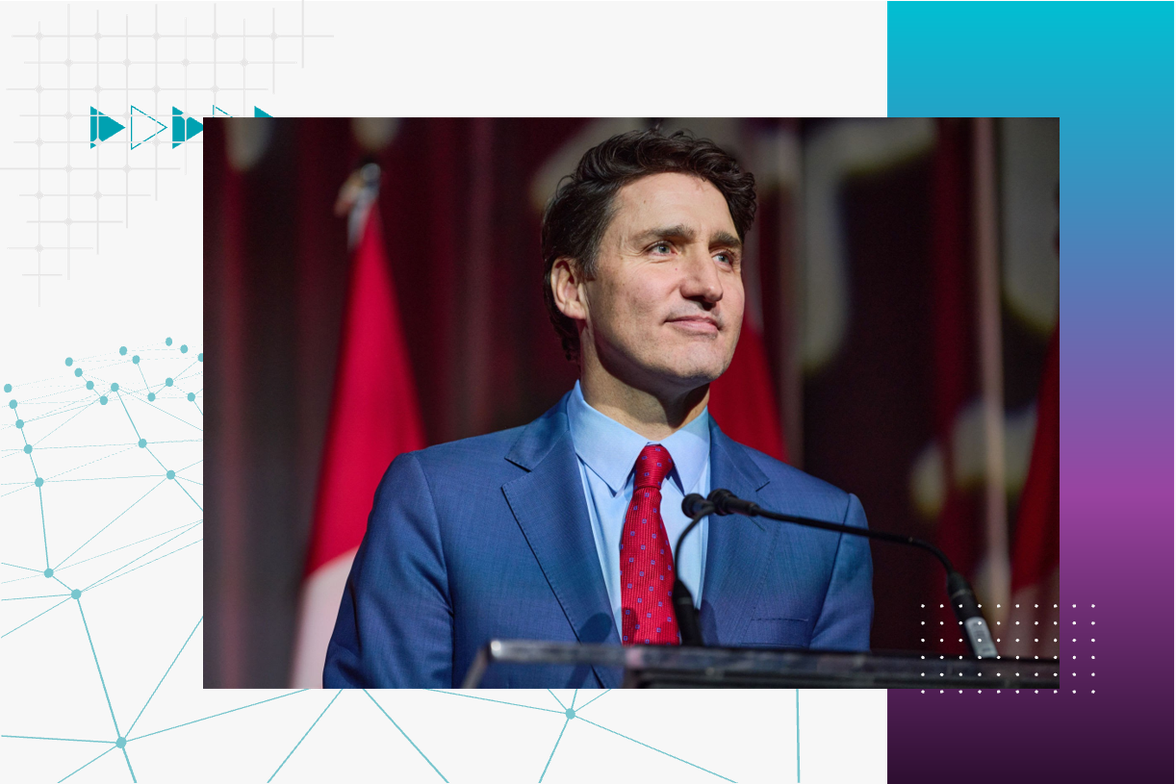
Trudeau’s resignation signals political change with implications for Black Canadians and Africa

Trudeau

Prime Minister Justin Trudeau has announced he will step down as leader of the Liberal Party and as prime minister once a new leader is chosen on March 9. His decision follows years of declining public support, economic challenges, and political missteps that have reshaped Canada’s political landscape.

Trudeau’s leadership, once defined by progressive policies on diversity, climate action, and social inclusion, faced growing dissatisfaction—especially after the COVID-19 pandemic. Rising living costs, mounting national debt, and a worsening housing crisis weakened his popularity, making his resignation inevitable.

Economic struggles and political turmoil defined Trudeau’s final years

Trudeau’s economic policies played a key role in his declining popularity. The post-pandemic period saw record-high inflation, soaring living costs, and an affordability crisis. Inflation peaked at 8.1% in June 2022, the highest in decades, driven by supply chain disruptions and energy price hikes. While it fell to 3% by late 2024, essentials like groceries remained 20% more expensive than in 2021.

Housing affordability also became a major crisis. Between 2021 and 2024, Trudeau’s government admitted 1.5 million immigrants, the highest per capita in the G7. While immigration contributed to economic growth, it intensified Canada’s housing shortage, pushing property prices and rent beyond the reach of many middle- and lower-income Canadians.

At the same time, pandemic relief programs such as the Canada Emergency Response Benefit (CERB) and wage subsidies led to a surge in national debt from $721 billion in 2019 to over $1.2 trillion by 2024. While these measures provided short-term relief, concerns over fiscal responsibility grew.

By late 2024, Trudeau’s approval ratings hit a historic low. A December 2024 Angus Reid poll showed Liberal Party support had dropped to 16%, placing them behind the Conservatives and the NDP. The resignation of Deputy Prime Minister Chrystia Freeland, following a cabinet dispute, further weakened Trudeau’s leadership. With mounting pressure from within his party and dwindling public trust, he had little choice but to resign.

Trudeau’s legacy in Black economic empowerment and racial equity

Despite his declining popularity, one of Trudeau’s key legacies was his commitment to Black economic empowerment. His government made historic investments in Black communities, focusing on entrepreneurship, racial equity, and anti-racism initiatives.

In response to the global racial justice movement following the murder of George Floyd, Trudeau’s government committed $666 million to Black-focused programs, including:

  • Black Entrepreneurship Program (BEP): A $221-million initiative launched in 2020 to support Black business owners through funding, mentorship, and training.
  • Black-Led Philanthropic Endowment Fund: A $200-million fund established in 2021 to provide long-term financial resources for Black-led charities and organizations.
  • Anti-Racism Strategy (2019–2022): A $45-million federal initiative to combat systemic racism through education, community programs, and policy reforms.

Trudeau also made history as the first Canadian prime minister to kneel during a Black Lives Matter protest, showing solidarity with the movement. Unlike previous governments, which took a broad multicultural approach, Trudeau’s administration specifically targeted economic disparities within Black communities.

The question remains: Will the next government continue these efforts or reverse them?

Canada’s engagement with Africa lacked direction and strategy

While Trudeau’s government made efforts to strengthen Canada-Africa relations, its approach lacked depth and long-term vision. Canada engaged with Africa through trade agreements, development aid, and multilateral partnerships, but it remained a secondary player compared to other global powers.

Trudeau’s government expressed interest in the African Continental Free Trade Area (AfCFTA), the world’s largest free trade zone, but Canada failed to position itself as a key economic partner in Africa’s development.

His Feminist International Assistance Policy (FIAP) directed aid toward African women’s education, healthcare, and entrepreneurship. During the COVID-19 pandemic, Canada contributed $440 million through COVAX to support vaccine distribution in African nations.

However, Canada never developed a comprehensive Africa strategy. The absence of a structured plan for trade, diplomacy, and investment limited its influence at a time when Africa’s global importance was rising.

Black voters will play a decisive role in Canada’s next election

As Canada prepares for its next election, Black voters will be a crucial demographic in shaping the country’s political future. Historically, Black Canadians have supported the Liberal Party, drawn by its progressive stance on immigration, civil rights, and social justice. However, economic challenges and racial inequality concerns could shift voting patterns.

Kasi Insight’s poll during the 2021 election among 400 Black voters in Canada identified three key voter groups, each with distinct priorities:

  • African-identifying voters prioritize employment opportunities, workplace discrimination, and immigration challenges.
  • Afro-Caribbean-identifying voters focus on unemployment, healthcare, and financial struggles post-COVID-19.
  • Black Canadian-identifying voters emphasize racial profiling, inequality, and workplace discrimination.

While the Liberal Party has traditionally received strong Black voter support, rising costs of living and economic instability may lead some to consider alternative parties.

The Conservative Party, which has historically struggled to attract Black voters, has been making efforts to appeal to immigrant communities by focusing on economic policies and tax cuts. However, its support among Black voters remains lower than that of the Liberals and the NDP.

The next government must prioritize Black economic empowerment and a stronger Africa strategy

With Trudeau stepping down, Canada’s next government must focus on advancing Black economic opportunities and developing a meaningful engagement with Africa. Key priorities should include:

  • Closing the wealth gap: Addressing wage disparities and expanding financial opportunities for Black Canadians.
  • Supporting Black entrepreneurs: Increasing access to funding and resources for Black-owned businesses.
  • Developing a clear Africa strategy: Strengthening trade relations, investment opportunities, and diplomatic engagement with African nations.

Trudeau’s departure marks the end of an era but leaves unanswered questions

Trudeau’s resignation marks a turning point in Canadian politics. His government made unprecedented investments in Black communities, yet economic struggles and affordability concerns eroded public trust. His approach to Africa lacked a clear strategy, leaving Canada’s relationship with the continent uncertain.

As the next election approaches, Black Canadians and African nations will be watching closely to see whether the next government builds upon or reverses Trudeau’s policies. The political decisions made in the coming months will shape the economic future of Black Canadians and Canada’s role in Africa’s development.

Contact our team today to explore how our decision intelligence can empower your decision-making process. Win with confidence with Kasi Insight. https://www.kasiinsight.com

Share on socials using this caption: 🚨 Trudeau is out! 🇨🇦 What’s next for Black businesses and Canada’s role in Africa? 🌍 Will the next leader build or bail? 👀 #TrudeauResigns #BlackWealth #CanadaAfrica #ElectionWatch


Recent posts

See all

Yannick Lefang, Eng

Trust Is Becoming Economic Infrastructure

Sandra Beldine Otieno, MSc

Consumer confidence loses momentum in October

Sandra Beldine Otieno, MSc

Confidence plateaus in September as caution defines household behavior

Subscribe to our free newsletter